Friday, May 22, 2026

Ancestral Background, Belief, and Personal Expression


I could have entitled this as “What Does It Matter if My Father were a Baptist and My Mother were a Catholic?”  Another could have been “What is the Artistic Meaning that My Father’s Lineage was Northern British Isles and My Mother’s was Southern Italy?”  

(By the way, in my drawings here of my parents, my mother’s hair was dark but I just didn’t fill it in when drawing.)

Neither of these titles would get to the nub of what I want to note and both may lead one into another direction of either belief or ancestry, and those would be too narrow.

Instead, I am trying to figure out if there is any meaning at all to my own artistic expression and my upbringing and heritage.  Do they all work together?

I suppose that I can claim they do work together since, after all, here I am drawing particular kinds of artwork and everything I’ve lived through so far has led to this moment of artistic expression. 

That would mean those expressions necessarily connect to my past as well as looking forward to my future, but that is also a presumption that my art is a clear and direct understanding of those moments.  I cannot assert, however, that it is the case simply because I may not have perfect comprehension of my life.  What can I affirm?

Of course, biologically my ability to coordinate perception and making marks on paper comes from my parents, and surely family, school, and experience shaped that ability too.  Whether the drawing is an unequivocal result of those factors is another question, but something of those life events likely remains within the visual interpretation just as they are present in nearly everything else that I do.

Does this mean that there is always a direct line between personal history and the artistic outcome?  I don’t think so, since what I want to present may not be anything that my family would ever have guessed or it’s obscure that my experiences would have led to that inevitable reaction.

Wednesday, April 22, 2026

It's Earth Day

 Here is a tribute to some species lost; The Secretary's Desk.  Although I think some have reported that the Chinese River Dolphin has been found but no serious evidence so far.


Tuesday, April 14, 2026

Drawings Based upon Past Art

I enjoy reviewing past art as much as anyone else, and a few times the work has inspired me to try another composition based upon the earlier presentation.  Here, I took a couple figures from Botticelli's Primavera and placed them in a picture about spring cleaning, Asymmetry of the Spring, wherein there is an encounter with a spider.  

Remember that you can click the image to enlarge it for easier viewing.


A few people have remarked that my style tends to a surrealist outlook or even a humorous one.   While that may be the case, my point is to show how one may vary an original composition to gain another effect.  Granted, large schematic drawings of spiders are not everyone's favorite subject, but the Botticelli figures themselves appeared well-suited for their function in this drawing.

Similarly, I went ahead with the same outlook for the drawing Yield of the Fall, using figures from a Durer print.


 An environmental and agricultural lesson did not seem out-of-place here, and I like to think that an artist as Durer, who enjoyed painting flora and fauna, would have agreed.  As with the Spring drawing, this varies the composition a bit though not as much.  It's fairly faithful to the Durer original except for the absence of some plants and critters.  Again, the tone is decidedly different from the original; whether for the good or for the ill depends upon artistic taste.


Saturday, February 21, 2026

Can You Teach Students to be an Artist?


Big question, especially for those who earn a living to teach visual art.  Of course, one can ask that question about any of the Arts whether architecture, literature, music, performing art, but here I’ll stay with the visual arts.

First, I think that there are at least a couple approaches that one can teach, and those are a way to train or work on a skill and the other is critical judgement about visual art.  Now, since the rise of movements as Dada the former lacks a bit of standing in contrast to, say, 150 years ago.  No longer does skill alone qualify to “make art” but something more and that would be another article so maybe I’ll tackle that in the future.  I have expressed a bit about it already in “How to Make Art” https://danielraymondchadwick.blogspot.com/2021/04/how-to-make-art-or-is-that-right.html.

Nonetheless, I think a physical skill would go a long way toward making imagination a concrete reality.  For instance, does it help to know about the technology for digital art and how to use it best?  Sure.  And that is a skill one can learn, although as with any other skill, how good they are at it will vary by individual ability and training. That goes for other methods like painting, drawing, fiber-art; it’s convenient to know the strengths and limitations of the tools and the ability to employ them.

Critical judgement about visual art would also be another approach that one can learn. True, figuring out why artwork is “good” or “not so good” may be a bit of a balancing act on the high wire of aesthetics, but as long as one refuses to get caught up in trends then that will cultivate the evaluating mind.  Understanding an artwork sub specie aeternitatis, or “in the big picture” both aesthetically and historically, is important in this regard.

So, now that a student has a level of skill and comprehension about evaluating visual art, then are they ready to make Art?  I suppose one may contend that they’re more prepared now than they were and I would agree.  But I emphasize that the artist must have something to present whether in terms of formal visual aspects or in a message of some sort.  Along with that, it would help to do so with imagination. 

One still may ask: is that enough?

Sunday, October 5, 2025

34th WNY Regional in Buffalo

The Information Age; pencil on panel, 36" x 24"
 

The WNY regional is a show that has taken the place of the old "WNY Show" put on by the Albright-Knox Art Gallery.  So, it's always an honor that a judge accepts an artwork for that exhibit.   This year the juror, Shasti O'Leary Soudant of Buffalo State College, selected my pencil drawing The Information Age for this year's display of regional art.  It is nice to report that she also awarded it a second place prize for the exhibit.

The opening is this Friday, October 10, and it will run until November 14.  The gallery is located on 1 Linwood Avenue and hours are 11-5 Tuesday through Friday and 11-3 on Saturday.


Friday, September 12, 2025

The Visual Arts as Truth: Plato's Mistake

Appearances do not deceive, presuppositions do.

I hold that Socrates was mistaken or, at least, Plato was mistaken, in asserting that the painterly icon or the table is less true.  Since Plato put this in the mouth of Socrates in The Republic, I will refer to Socrates.

After questioning Glaucon, he determined three levels of the table:

1.  The table is a Form or Idea.

2.  The table the carpenter builds is one they abstracted from the Form.

3.  The table the painter draws is one they abstracted from the carpenter’s table.

Hence, the painterly depiction is less true as it is twice removed from the Idea.

I believe that the mistake Socrates made was that he understood the image as an imitation of a table.   Of course, the image is not an imitation of a table but it is an image of a table.

An imitation of the table might be a small model of it, used as a prototype in order to make a large one.  A table in a painting will function as part of the artistic composition on a flat surface--these are two different entities.

Rene Magritte illustrated this difference very well in his The Treachery of Images.

Ceci n’est pas une pipe, “This is not a pipe.”

An imitation of a table might be another table the carpenter builds.   What the carpenter builds, however, is part of the process of giving shape to an idea; it is neither a corruption nor a distancing of it.

Artwork or craftwork, at the least, is a re-presentation of an idea rather than imitation.  As such, it is no longer an image but is an icon, a reality in itself.

The break with the Platonic approach is this: artwork is not an imitation of an idea but the re-presentation either by psychological extension or metaphysical projection and a culmination of the artistic idea as an icon.

It is not a matter of seeing the shadow of the Form but it is the reality of the Form incarnate.

I’d say that the artist’s idea is incomplete as image until the artwork is complete as icon.

Sunday, September 7, 2025

Two Exhibits: Fringe '25 and the 1570 Gallery

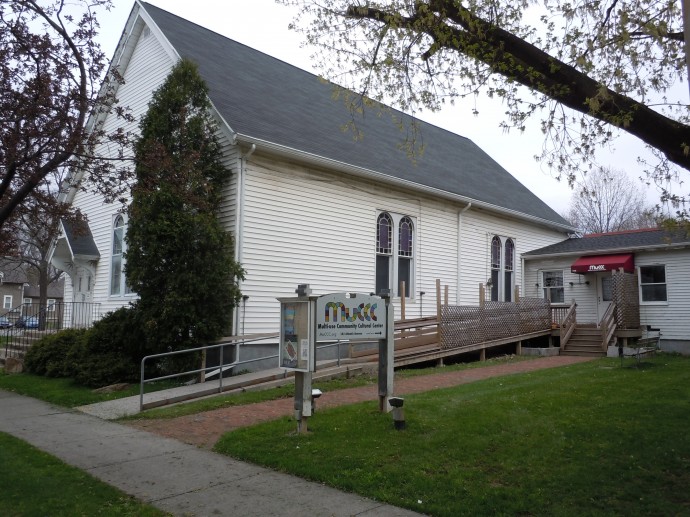
The Fringe Festival is afoot in Rochester, NY!  And that means an Arena Art Group show at the Multi-Use Cultural Center at 142 Atlantic Avenue.  That exhibit is open during all theater presentations from September 7 to October 31.

Another AAG show is at the 1570 Gallery at Valley Manor on 1570 East Avenue, also in Rochester.  Gallery hours are Monday through Friday from 10 am to 8 am.    In this exhibit I entered Firemen's Picnic whereas at the MuCCC I decided upon The Triumphant (18" x 24", pencil on paper) shown below.


Friday, August 15, 2025

The Arts, Narrative, and Visual Art


Lawrence Alma Tadema (1836-1912), Ask Me No More (1906)

            Do people enjoy the arts or do they appreciate more a story?  For example, consider music; often the cliché is that “music is the universal language” because, well, it sells so much whether it was records, 8-tracks, cassette tapes, CDs, or currently MP3s.  Everyone likes music! The question is whether all those recordings were music as music or music as songs.  Big difference!  So what does this mean?

            It means that maybe most of those recordings were songs more than they were music.  Yes, I know, songs are lyrics sung in a particular melody; i.e., it’s still “music.”  That’s true, though my point is that people like the tunes, sure, but mainly because of the story behind the tune.  Have I taken a survey?  No, I haven’t done that.  Nonetheless, there’s another way to see behind the belief that “everyone likes music!”

            I’ll use myself as a point of discussion and not because of ego but it’s simply what I tend to like when I listen to music (though I don’t listen much).  And what I’ve noticed over the decades is that what I like contrasts with the majority of people I know and confirmed by simply looking up what sells.

            Okay, so what kinds of music, what genres, do I like the most?  I like jazz, soundtracks, and orchestral music, the latter comprising the last 300 years of western music, and occasionally eastern too (India, Chinese).  But do these sell well?  Nope.  Statista presents data that Stage and Screen (I presume this means "soundtracks") constitute 2.7% of sales, whereas Classical and Jazz each make up about 1% of the sales to the American population.  Granted, it’s an old list from 2018 but I doubt it’s changed much.  https://www.statista.com/statistics/310746/share-music-album-sales-us-genre/

            What does this mean in the visual arts?  I think it’s comparable in that most people want stories in visual art since it’s difficult for them to appreciate shape or color or value contrasts alone.  Similar to orchestral or jazz music, visual compositions without a narrative and intended for display on their own merit will be a challenge to most audiences.  By contrast, I’m sure most people today would prefer Lawrence Alma-Tadema’s Ask Me No More (shown above) to any non-representational painting by Kandinsky around the same time.  Thus, if a visual or musical artist presents work that does not include a narrative, then they better be ready for a smaller audience.  That’s neither good nor bad, though it may be sad, but just the reality of the situation in those art forms. 

Saturday, July 19, 2025

Link Gallery at Rochester City Hall

From June 30 to July 25, the Arena Art Group presents "Summer in the City."  City Hall is open M-F from 9 am to 5 pm and there is parking available all around.    I selected this drawing, Shadows of Freedom (24" x 18", pencil on paper), as appropriate for the exhibit. 


Wednesday, July 2, 2025

Art and Society


Romare Bearden, Quilting Time (1979)

            Is visual art or any art form meant for pleasure only?  Can artistic presentations be a venue for the philosophical or the prophetic to emphasize protest? 

            These are rhetorical questions to me since the obvious reply is “Yes!”  While Art for pleasure is not only legitimate but desirable given the need for delight in lives, I think that audiences satisfied with their own situations may not accept Art as either philosophical or as prophetic.  Why?  Because such Art may nudge an audience in an uncomfortable way as it pricks the conscience, or even if it just causes people to re-consider another look at the world; both could be a useless exercise as viewers reject it.

            Besides, if one is assured already of their understanding of the world, why would they want an art presentation that teaches otherwise?  For some it may be an eye-opener, a revelatory experience of a new outlook.  But for others it may be a sharp razor that cuts without healing—though I should add that healing takes place with humility.  In any case, there will be no winning of friends and influencing people that way; for an historical reference think of the plight of either Socrates or Jesus.

            Now, there’s no need to place an artist at the level of famous philosophers and religious teachers (though I would argue famous artists do inhabit the same heights), but like A Square in the story Flatland the artist does have the task of trying to communicate another vision of the world, or a vision of another world.  Often that means one is addressing those who only want the artist to affirm the status quo, and acting to the contrary will usually translate into some kind of trouble, minor or major.  Minor, in that the artist will find it challenging to help an audience along to a new understanding; major, in that others may threaten the artist.

            Western visual art offers many such artists.  Usually, people think of the Dada and Surrealist movements of the last century.  Going back another hundred or so years, one sees that Goya and Hogarth opposed conventional values in their work.  There are others as the Expressionists after WW1, but up until the 18th and 19th centuries most visual art reflects the patronage taste for gods and heroes as artistic forms of all kinds often were the media of the powerful.

            Eventually, a step into the working classes as a source was a new philosophical look at the world or, at least, new in the 18th century. Today, we take for granted still life, landscape, and scenes of people in mundane chores, but that imagery was a break from the past.  Yes, there is a precedent for it in ancient villas and their decorative wall painting, in small figurines of workers, but directly confronting the viewer this way after more than a thousand years of angels, princesses, and knights marked a turn in thought.  A protest against the medieval landscape?  In part, yes, and it also was enthusiasm for the new way of understanding.

            So, it continues today in the work of many artists who react to the unfamiliar ways science informs us about the world, who watch a population struggle for their independence and rights, and who attempt to evaluate the cultural role of technology.  Big topics, topics that stretch an artist to the imaginative limit, and then Art becomes either an indicator of values or a call for change.